A LOOK AT THE NATIONAL RISK REGISTER FOR THE U.K
LINK TO THE LATEST FULL REGISTER BELOW

THE CIVIL CONTINGENCIES ACT
BE AWARE OF THIS ONE ! YOUR PLANS OF LEAVING A CERTAIN AREA IN CRISIS OR DURING A PARTICULAR SCENARIO, BUGGING IN OR GETTING TO YOUR BUGOUT OR HOME COULD BE ULTIMATELY AFFECTED SHOULD THIS ACT BE IMPLEMENTED.


THE TOP 4 RISKS OF THE NATIONAL RISK REGISTER
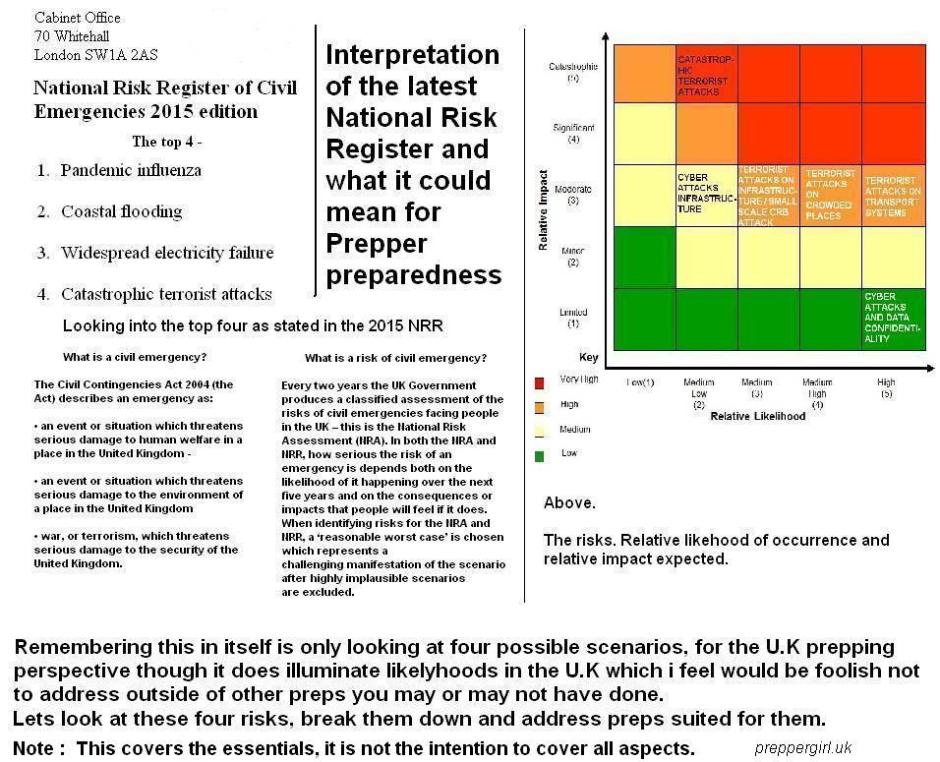
1. INFLUENZA PANDEMIC
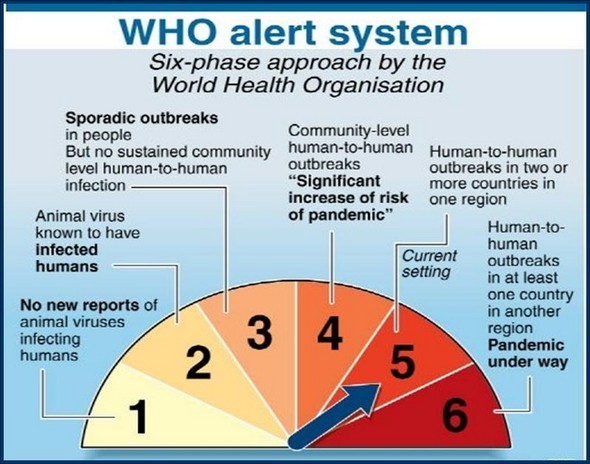
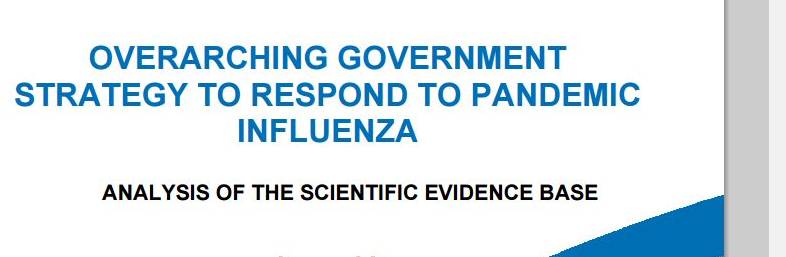
Human diseases can take a variety of forms and consequently their impacts can vary considerably in both scale and nature. Influenza pandemics arise because of new influenza viruses that are significantly different from recently circulating influenza viruses. This means that few people, if any, have immunity.
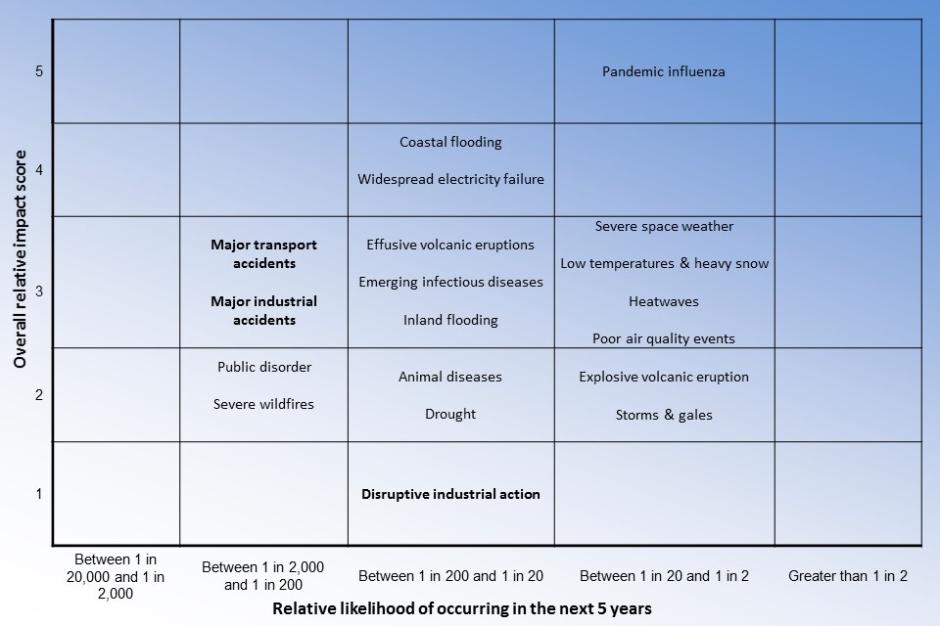
Consequences may include in the case of pandemic influenza, half the UK population potentially being infected, with between 20,000 and 750,000 additional deaths potentially by its end.
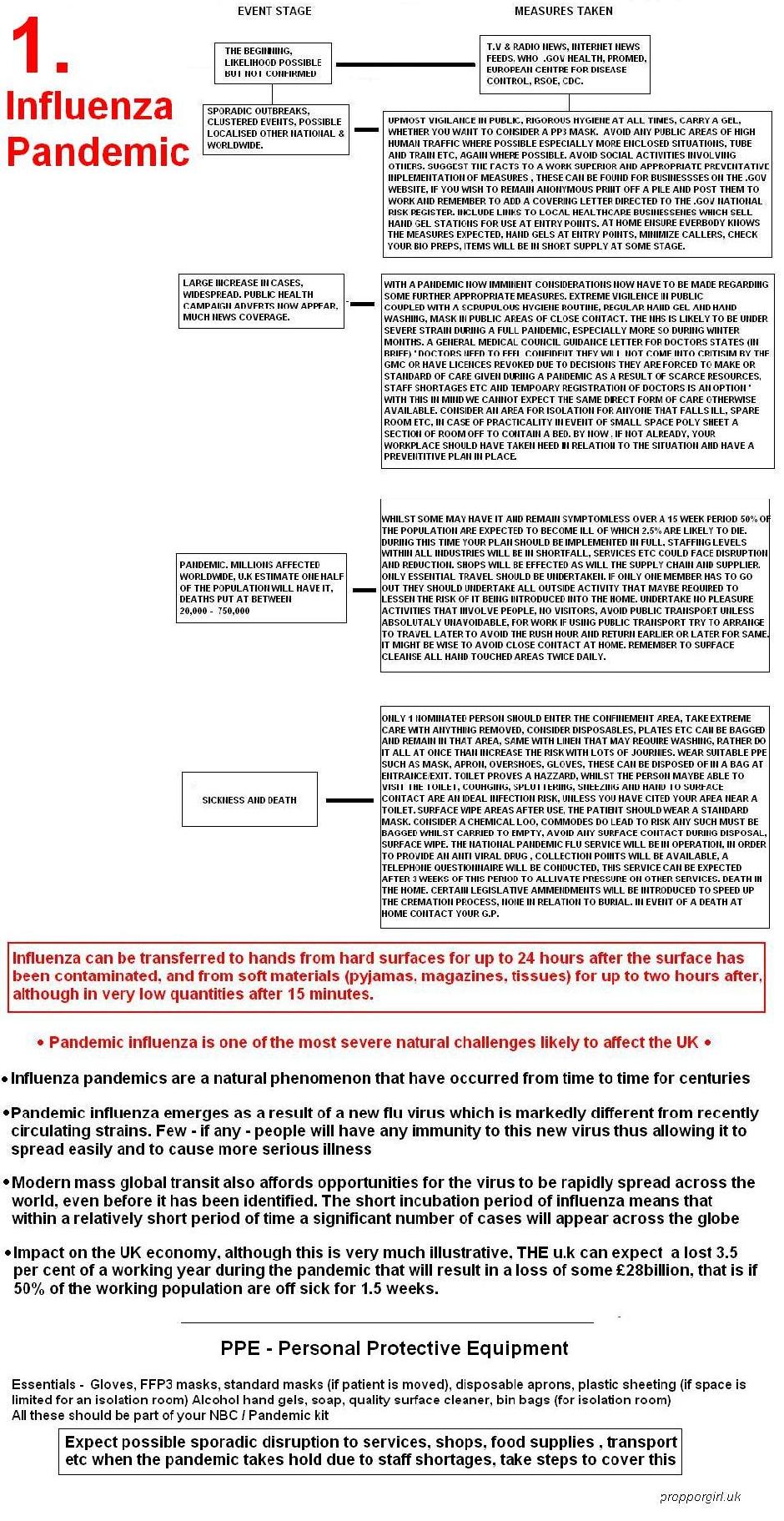
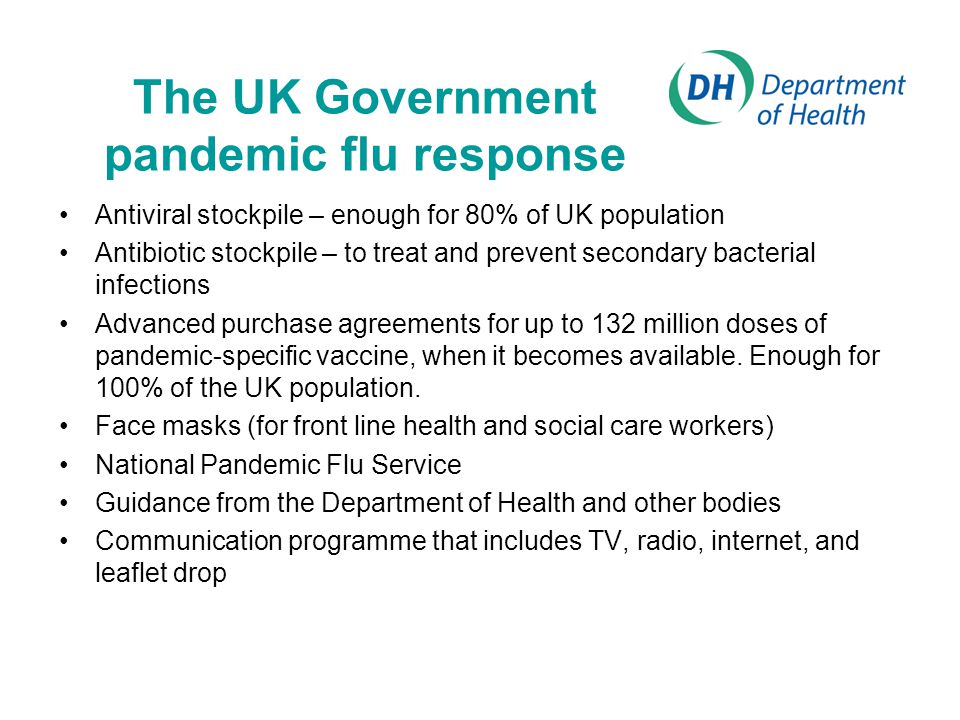
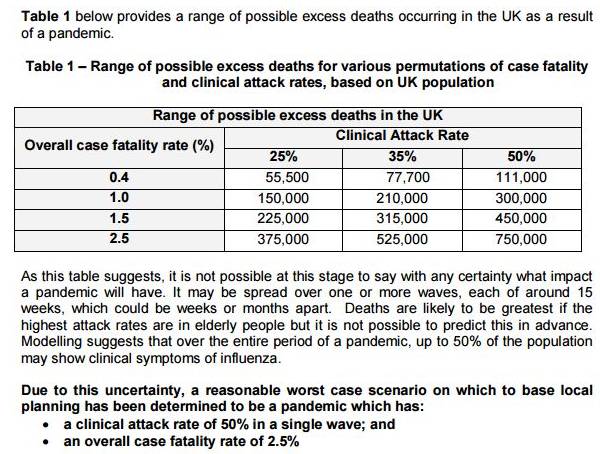
Pandemic influenza emerges as a result of a new flu virus which is markedly different from recently circulating strains. Few - if any - people will have any immunity to this new virus thus allowing it to spread easily and to cause more serious illness. The conditions that allow a new virus to develop and spread continue to exist, and some features of modern society, such as air travel, could accelerate the rate of spread. Experts therefore agree that there is a high probability of a pandemic occurring, although the timing and impact are impossible to predict
2. COASTAL FLOODING
What is the cause? A mixture of of high tides, waves and storm surge. A storm surge being strong wind forcing the sea water to the coast where it rises up, low pressure existing within the said storm raises the seas surface in that area around 1cm for every millibar that the air pressure drops.
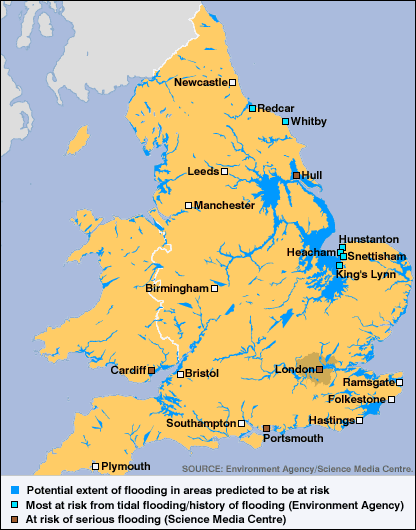
Preventing future flooding and coastal erosion remains paramount . Coastal flooding has the potential to have the most widespread impact in a single event. The last significant event of this type to affect the UK was in January 1953 when the east coast of England suffered one of the biggest environmental disasters ever to have occurred in this country. Flood defences were breached by a combination of high tides, storm surge and large waves. Over 600km2 of land were flooded, 307 people killed and 200 industrial facilities were damaged by floodwater.
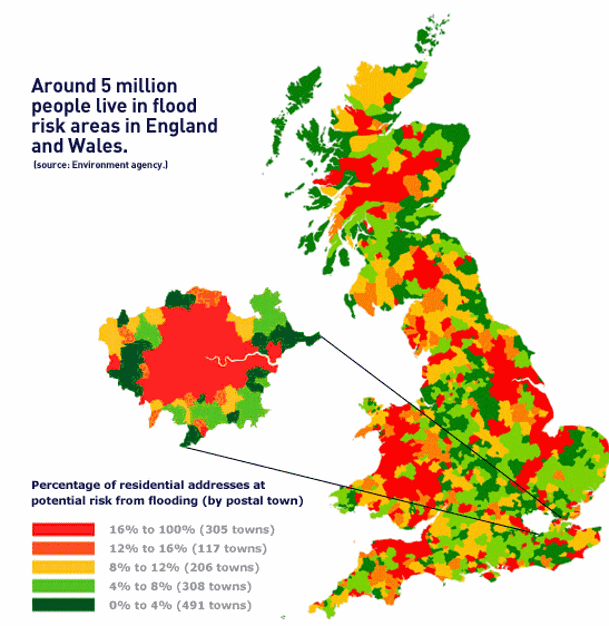
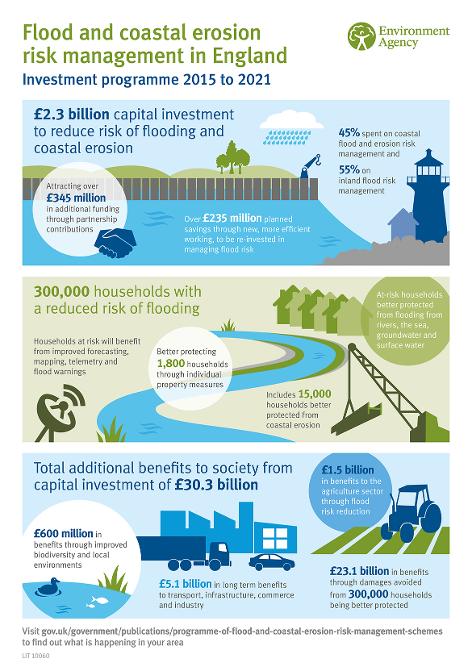
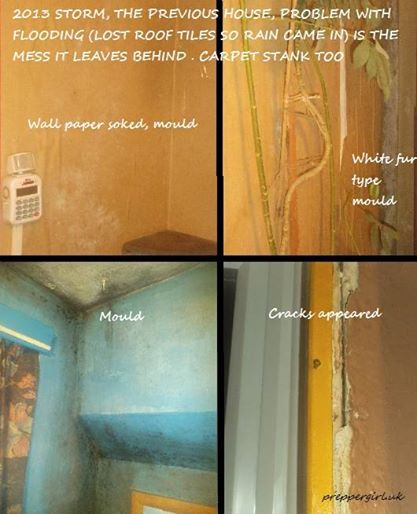
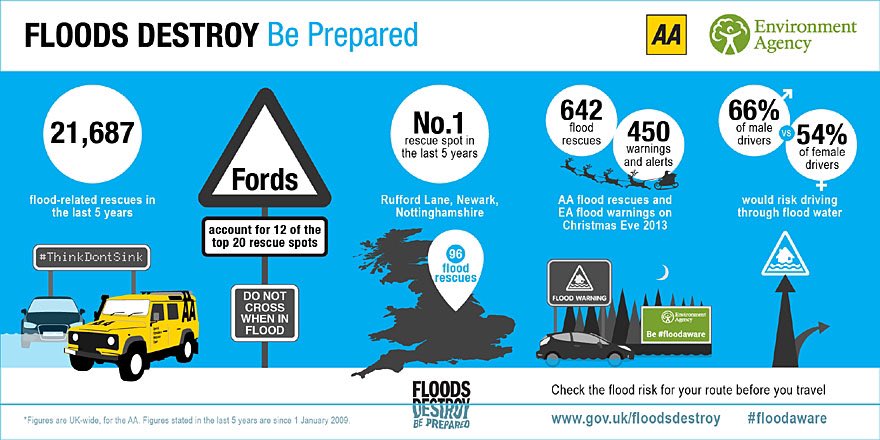
Living in a risk area ?
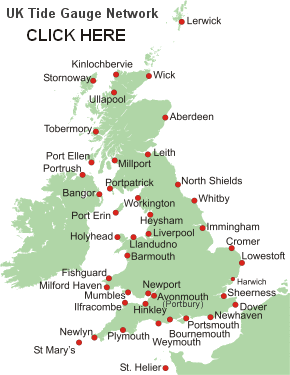
Be aware at all times of the situation, join up to flood alerts local to you, sort yourself a basic flood kit and have suitable clothing ready to wear, remember to always follow Met Office weather reports, stay vigilant. Consider protection measures for your home.

3. WIDESPREAD ELECTRICITY FAILURE
CLICK PANEL BELOW FOR CURRENT NATIONAL GRID STATUS
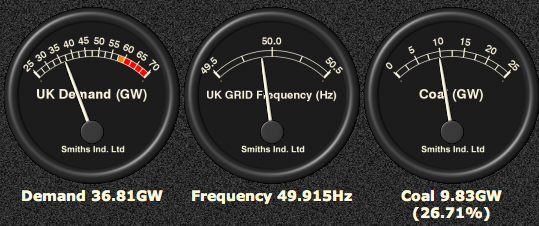
NATIONAL GRID CURRENT WIND, COAL, NUCLEAR & OTHER CLICK BELOW
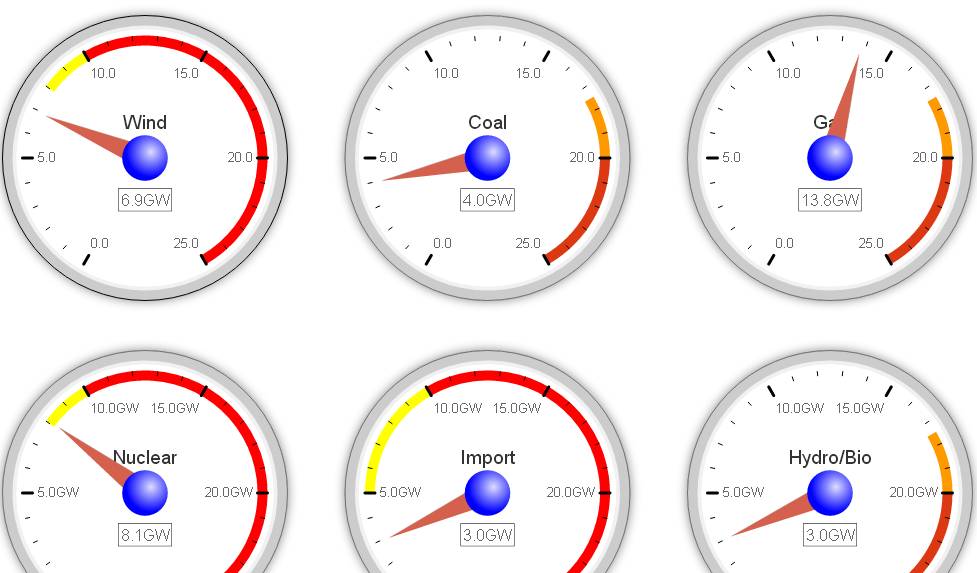
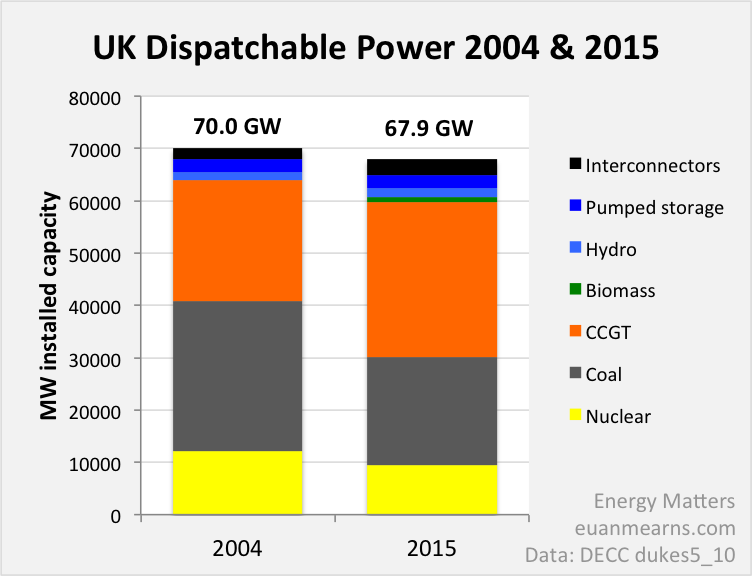
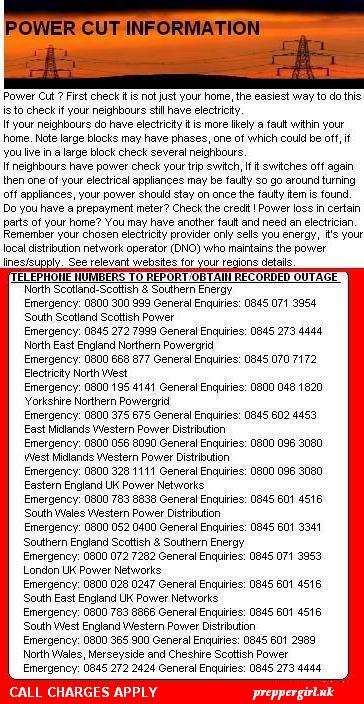
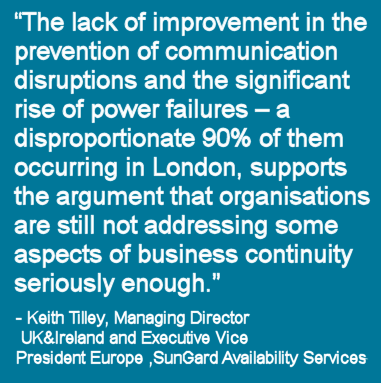
Widespread electricity failure – Previously a risk grouped within the major industrial accidents risk category, the risk of widespread electricity failure has been reassessed in light of an enhanced understanding of the risk’s impacts. As a result, is now assessed to be very high, and thus a priority risk. Although the UK has never before suffered a national loss of electricity, and this does not represent an increase in likelihood, the consequences of such an event could be significant.
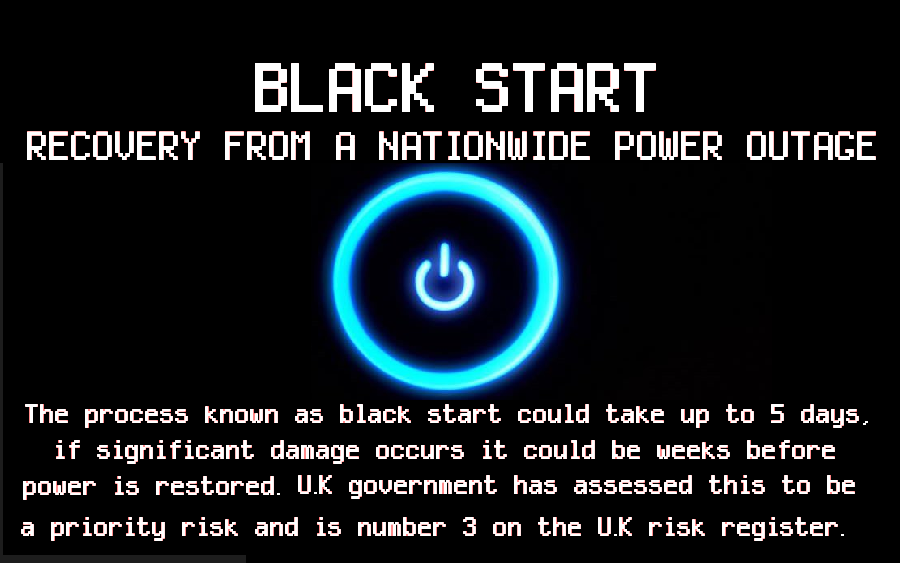
A nationwide loss of electricity, for which the technical recovery process “Black Start” could take up to 5 days, would affect millions of consumers and critical services. If significant damage is caused to the transmission lines, it could be weeks before some parts of the network are fully recovered and power is restored.
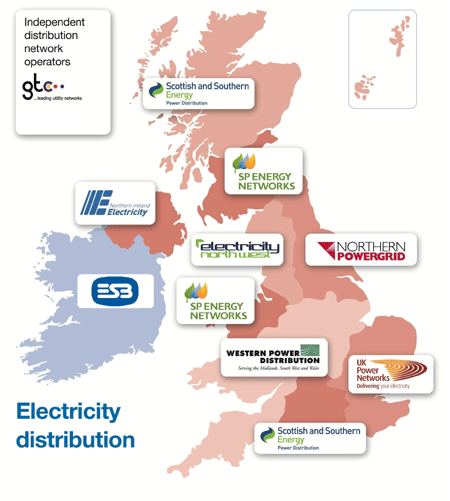
In the event of a national power outage, and provided there has been no damage to the system, the objective would be to restore supplies throughout the UK within five days although full restoration may take longer. Restoration of supplies could take longer if significant damage had been sustained to electricity infrastructure.
The DECC (Department of Energy & Climate Change) are responsible for planning regarding possible emergencies involving electricity, gas and oil supplies, for more on this click the link below.
A few major power outages suffered in other countries
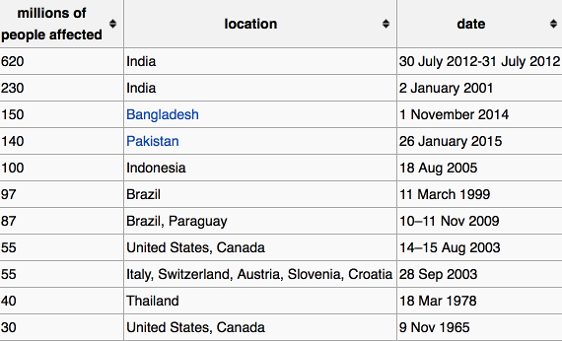
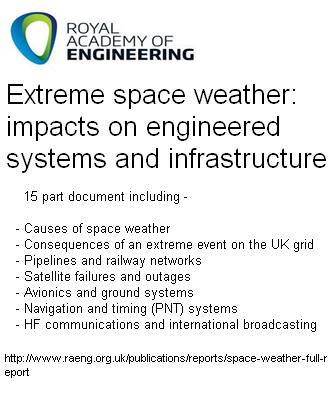
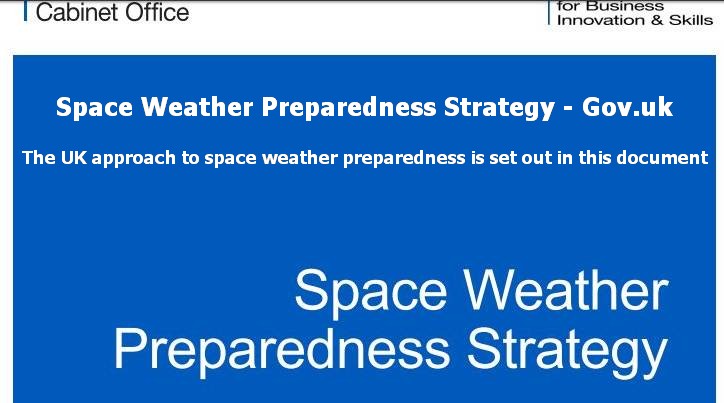
Causes of major disruption could include cyber attack, severe weather, terror related attack, industrial action, space weather, natural disaster, manmade disaster, over demand, EMP.
| Solar X-rays: Geomagnetic Field: |
|



4. CATASTROPHIC TERRORIST ATTACK

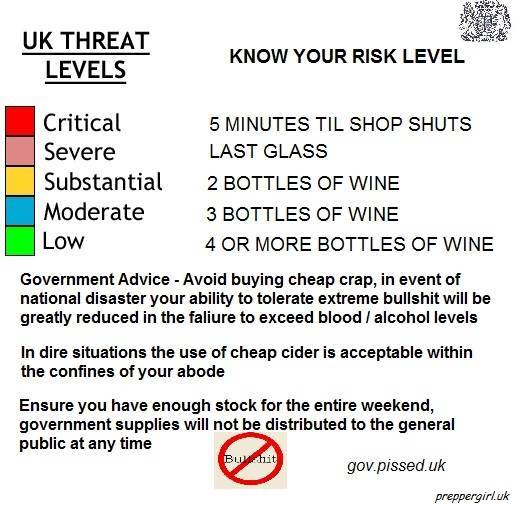
MI5 issues threat levels to provide "a broad indication of the likelihood of a terrorist attack."
- Low:
- An attack is unlikely
- Moderate:
- An attack is possible, but not likely
- Substantial:
- An attack is a strong possibility
- Severe:
- An attack is highly likely
- Critical:
- An attack is expected imminently

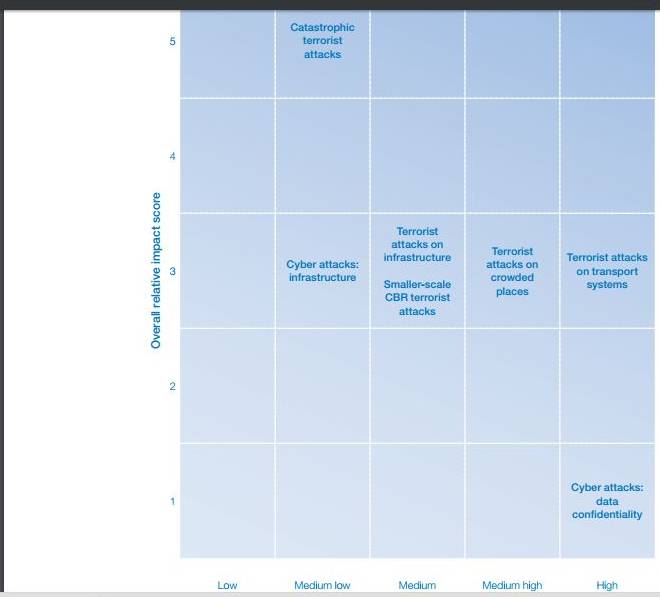

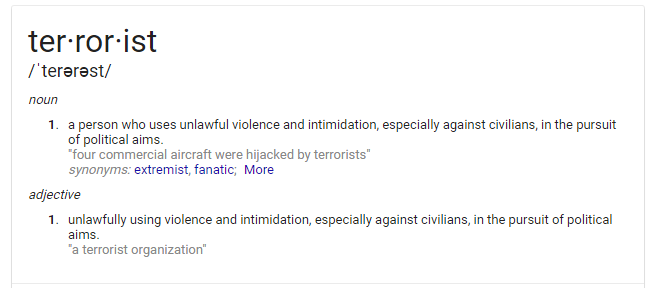
Catastrophic terrorist attacks. This type of attack causes long term mass impacts of a magnitude over and above conventional terrorist attacks such as those targeting crowded places or transport systems. Catastrophic terrorist attacks are assessed to be less likely that conventional terrorist attacks. Although catastrophic terrorist attacks are unlikely, they cannot be ruled out. The likelihood of terrorists obtaining effective mass impact biological agents or a functioning nuclear device remains low but not negligible, and the impacts are potentially very serious. The UK faces a serious and sustained threat from terrorism both international and relating to Northern Ireland.
Consequences may include: Casualties and fatalities, criminal damage to public and private property and infrastructure within the affected area, potentially leading to a need for evacuation or temporary housing for those affected, potential for wider economic damage.

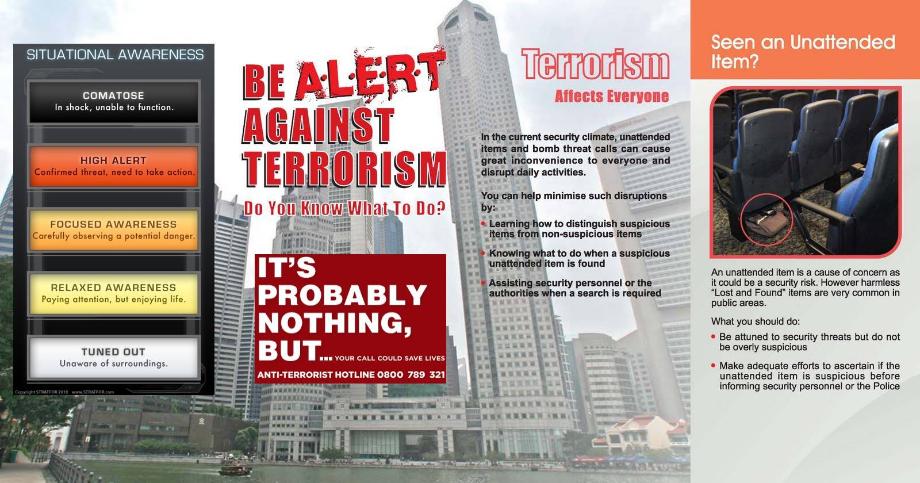
Be aware of current news and risk climate, know the current U.K threat level, be vigilant at all times, situational awareness when out in public, even more so in built up commercialised areas and high profile public events.


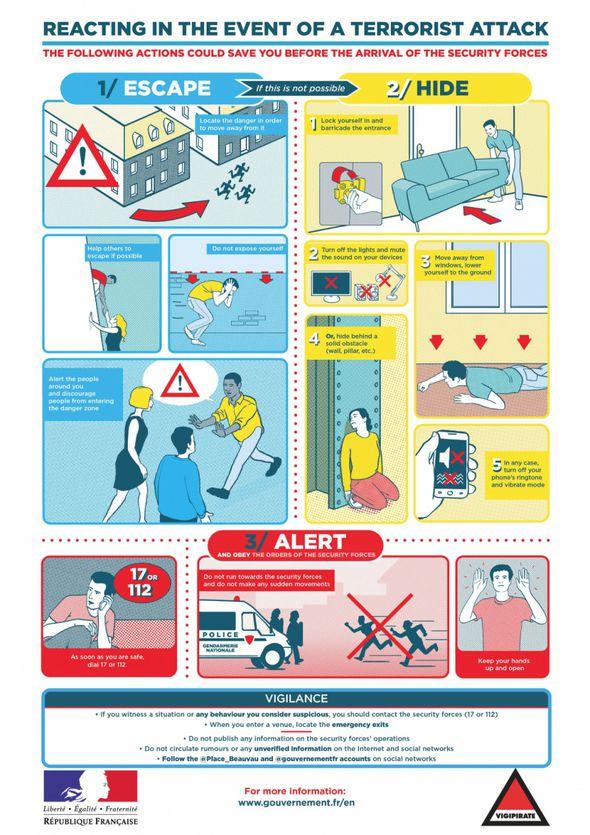
Just for fun . . .